A wasp nest might be a thing of beauty to look at (ideally from afar or when the nest has been abandoned) but they could, in theory at least, be moved to a new location because a ‘shell’ is formed around the growth and food cells, making the structure one single piece. Granted, it’d take a brave person to try it but a nest hanging from a tree could have the branch lopped off and tied to a new location out of harms way.
Honey bees can be re-homed by moving the comb they’ve built into a new structure – or, indeed, a hive can simply picked up and moved (in some places, this is frequently done around farmers fields as an aid pollination).
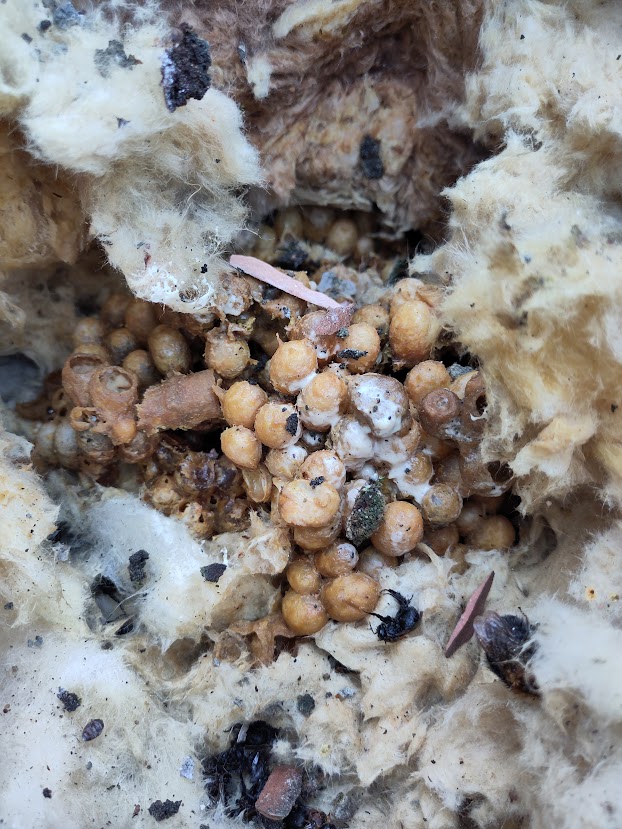
Bumble bees? They’re much harder and the image above helps to show why this is so: rather than the wasp or honey bee, there’s no ‘structure’ to a bumble bee nest. Their growth cells, food storage and so on is all simply a collection of individual cells that have been stuck together in a seemingly haphazard collection. It’s all very fragile and packed into whatever gaps and spaces exist in the immediate environment – in this case, under the insulation in a loft (this nest was discovered, quite by accident, when the roof was being re-laid). Any attempt to move a nest like this will almost certainly damage the structure and, as parts of the nest would be separated, moving it all in once piece would be highly unlikely. It’d also cause a significant number of the bees to take flight and those that get airborne won’t then know where their ‘home’ has been moved to: it’d end in failure and almost certainly destroy the colony.
Far, far better to leave a colony like this in place if at all possible. Bumble bees generally appear earlier in the year than most other bees or wasps and, equally, they tend to vanish earlier in the summer too. As they only sting when they have to, a colony can often be left to simply get on with their activity, doing such a wonderful job pollinating flowers while they go about their work.
However, we have successfully moved a good few bumble bee nests in the past – but only where the thing they’ve built their nest in can be moved: bird-boxes have been common, a few garden refuse sacks and, on one memorable occasion, a sports bag left in a garden. All these allow the bumble bee nest to be moved in one piece and, importantly, without disturbing the structure or the occupants. Done in the late evening when the bees are back from their days labours, as long as it’s done done quietly and carefully, when morning comes the bees seem able to ‘recalibrate’ their navigation immediately and are perfectly returning to their new home without any issues at all.