On the odd occasion, we’ve wondered how a church organ is crafted. All that wood and metal, working together to produce such an amazing sound – one wonders how on earth they’re made. Well, we got the chance to have a close-up look at one recently: the organist – who has to examine and fine-tune the instrument (an art form in itself, we suspect) – suspected there was something amiss and asked for a pest controller to take a second look at their findings.

Within the organ, there were short wooden ladders to enable the organist to climb in amongst the array of pipes. Walkways between the rows allow a (very careful and sure-footed!) operator to adjust the tone or pitch of each one and what a skill it must be to even know which pipe needs a tweak or by how much!
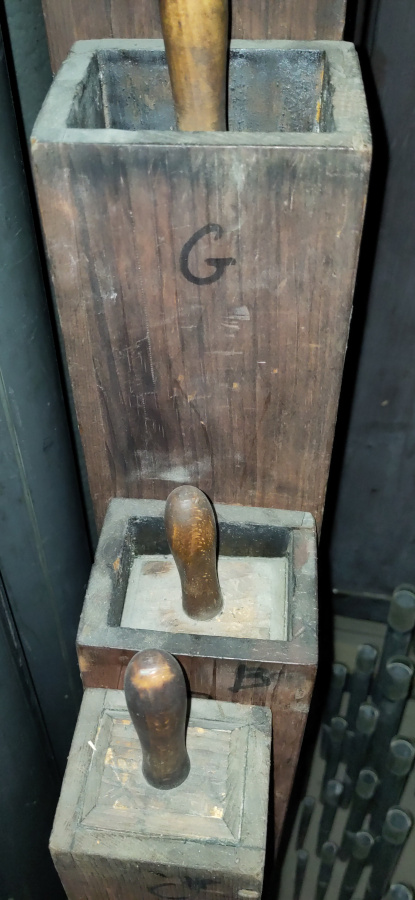
Some – like the larger boxes here – are marked with the notes they should play but the vast array of smaller metal tubes are either unlabelled (or have cryptic markings entirely lost on this musically-challenged pest specialist!). The fine layer of dust on all the wooden supporting beams add a certain timeless air to it all.
There are enormous baffles to change the sound, moved by levers that, somehow, end up where the organist can adjust them as they play. No wonder a church organ has so many controls beyond the simple keyboard! And all this designed and custom-made to fit into a building without the aid of a computer to help make sure it all goes together and works as required. They truly are a work of mechanical and musical art.
Oh, and the evidence? We almost forgot to look for that!